Johnson City Tennessee — Is It a Good Place to Live? (2026)
Johnson City is the largest of the three cities that make up the Tri-Cities metro in Northeast Tennessee — and it is increasingly the first place relocators want to explore. With a university, a growing downtown, solid healthcare, and housing prices well below the national average, Johnson City has landed on multiple “best places to live” lists in recent years. But is it right for you? Here is an honest look at what Johnson City offers and where it falls short.
Johnson City at a Glance
Population: ~75,000 (city); ~500,000 (Tri-Cities metro)
Median Home Price: ~$277,000-$290,000
Median Household Income: ~$55,400
Cost of Living: Approximately 15% below the national average
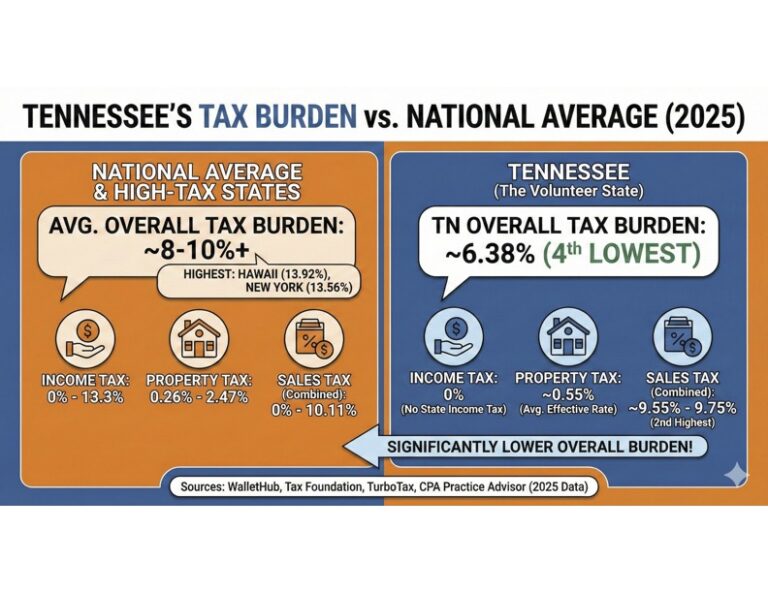
State Income Tax: None
Average Commute: ~15 minutes
What Makes Johnson City Attractive
It Has the Most Amenities in the Region
If you are comparing Bristol, Kingsport, and Johnson City, Johnson City has the most dining, shopping, entertainment, and cultural amenities. Downtown Johnson City has a walkable core with local restaurants, breweries, live music venues, and boutique shops. It has the energy and variety of a college town without feeling like one is overwhelming the community. For relocators coming from larger cities, Johnson City is the easiest transition in the Tri-Cities.
East Tennessee State University (ETSU)
ETSU brings a university-town dynamic to Johnson City — cultural events, continuing education opportunities, Division I athletics, and a younger energy that balances the region’s overall character. The Quillen College of Medicine and the university’s health sciences programs also contribute to the area’s healthcare infrastructure. For retirees, ETSU often offers audit programs and community events that can enrich daily life.
Affordable Housing
Johnson City’s median home price sits around $277,000 to $290,000 depending on the data source — well below the national median of $384,500. The cost of living overall is approximately 15% below the national average. Groceries, utilities, healthcare, and transportation costs are all lower than what most relocators are used to paying. For remote workers earning salaries benchmarked to larger markets, the math is compelling: no state income tax plus affordable housing equals significantly more money staying in your pocket each month.
Healthcare Access
Johnson City is the healthcare hub of the Tri-Cities region. The Johnson City Medical Center (part of Ballad Health) is the region’s largest hospital and a Level I Trauma Center. ETSU’s medical programs support a strong pipeline of healthcare professionals. For day-to-day medical needs, Johnson City offers more options and specialists than Bristol or Kingsport. For highly specialized care, Knoxville and Asheville are both reachable within about 90 minutes.
Outdoor Access
Johnson City is well-positioned for outdoor recreation. Buffalo Mountain Park offers hiking trails with panoramic views right within the city limits. Winged Deer Park provides walking trails, sports facilities, and lake access. The Tweetsie Trail connects Johnson City to Elizabethton with 10 miles of paved walking and biking. Watauga Lake, South Holston Lake, and the Cherokee National Forest are all within a 20-40 minute drive.
The Craft Beer and Food Scene
This is something that surprises many relocators. Johnson City has a legitimate and growing craft beer scene — multiple breweries have opened in recent years, and the downtown area has a diverse mix of restaurants ranging from Southern comfort food to international cuisine. It is not Nashville or Asheville, but for a city of 75,000, the dining options are well above what most people expect.
Where Johnson City Falls Short
Limited Public Transportation
Like the rest of the Tri-Cities, Johnson City is car-dependent. There is a limited bus system (Johnson City Transit), but it does not serve most of the city and is not practical for daily commuting. You will need a car.
Job Market Is Narrow
Major employers include Ballad Health, ETSU, and a handful of manufacturing and technology firms. The region does not have the deep job market of a Nashville, Charlotte, or Raleigh. If you are relocating for a local job (rather than remote work or retirement), research available positions in your field carefully before committing. That said, remote work has fundamentally changed this equation — many of the people I help relocate work remotely for companies in other states.
Airport Limitations
The Tri-Cities Airport (TRI) in Blountville offers limited commercial service. For broader flight options, most residents drive to Knoxville (about 90 minutes) or Charlotte (about 3 hours). Frequent business travelers should factor this in.
Growth Is Bringing Growing Pains
Johnson City’s popularity has increased noticeably in recent years. More people are moving in, which has driven up home prices (though they remain affordable by national standards) and increased traffic in some areas. Long-time residents have noticed the change. While growth brings investment and amenities, it also brings competition for housing and a gradually shifting character.
Who Is Johnson City Best For?
Johnson City is the best fit in the Tri-Cities for relocators who want the most amenities, the closest thing to a “small city” feel, and proximity to healthcare, dining, and cultural events. It is ideal for retirees who want activity and engagement, remote workers who want a vibrant downtown within reach, and families who value strong school options and university-town benefits. If you prefer a quieter, more rural setting, communities like Elizabethton, Jonesborough, or Bluff City may be a better match.
Frequently Asked Questions
Is Johnson City Tennessee a good place to live?
Yes. Johnson City consistently ranks on “best places to live” lists for its combination of affordable housing, low cost of living, no state income tax, access to outdoor recreation, strong healthcare infrastructure, and a growing downtown scene. It is the largest city in the Tri-Cities metro with a population of about 75,000 and a cost of living approximately 15% below the national average.
What is the cost of living in Johnson City TN?
Johnson City’s cost of living is approximately 15% below the national average. The median home price is around $277,000-$290,000, groceries are about 7-11% cheaper than the national average, and utilities run about 10-16% less. Tennessee has no state income tax, which further reduces the effective cost of living for workers and retirees.
Is Johnson City TN a good place to retire?
Johnson City is an excellent retirement destination. It offers no state income tax, affordable housing, access to healthcare through the Ballad Health system and ETSU’s medical programs, a walkable downtown with restaurants and cultural events, and proximity to mountain recreation. The moderate four-season climate and lower cost of living make it popular with retirees from higher-tax northeastern and mid-Atlantic states.
What are the downsides of living in Johnson City TN?
The main downsides include limited public transportation (you need a car), a narrow local job market (best for remote workers and retirees), distance from major airports (Knoxville is 90 minutes, Charlotte is 3 hours), and growth-related pressures including rising home prices and increased traffic. The area also has less racial and cultural diversity than larger metro areas.
Explore More Communities in Northeast Tennessee
Johnson City is just one part of the Tri-Cities region. If you’re researching a move, these guides may help:
- Elizabethton TN: One of Northeast Tennessee’s Hidden Gems — A smaller, more affordable community just 10 minutes from Johnson City, connected by the Tweetsie Trail.
- Bristol TN vs Bristol VA: What’s the Difference? — The twin city on the state line, with key differences in taxes and services depending on which side you choose.
- Moving to Northeast TN: 9 Things You Need to Know — A big-picture guide for anyone considering a relocation to the Tri-Cities region.
- The Ultimate Guide to Retiring in Northeast TN — A side-by-side tax comparison of Florida, Tennessee, and Virginia for retirees.
How far is Johnson City from Bristol and Kingsport?
Johnson City is approximately 25 minutes from both Bristol and Kingsport by car via I-26 and I-81. The three cities form the Tri-Cities metropolitan area with a combined population of about 500,000. Many residents live in one city and work or socialize in another.
Thinking About Moving to Johnson City?
Scott Henninger helps out-of-state buyers find the right home and the right community in the Tri-Cities. Licensed in both TN and VA.
Contact Scott

4 Comments